Measure
Use the stated dilution and avoid treating excess product as extra care.
Resource awareness is a set of choices: measured product use, sensible water use, durable tools, ventilation and purchasing decisions that can be explained.
The term is used here in a practical, limited sense. It does not describe a certification or a category of product. It describes the habit of asking what a routine uses, what it produces and whether a different arrangement could meet the same purpose with less. Germany has a long tradition of separating waste and reusing packaging, and many households are already familiar with the approach.
See the Checklist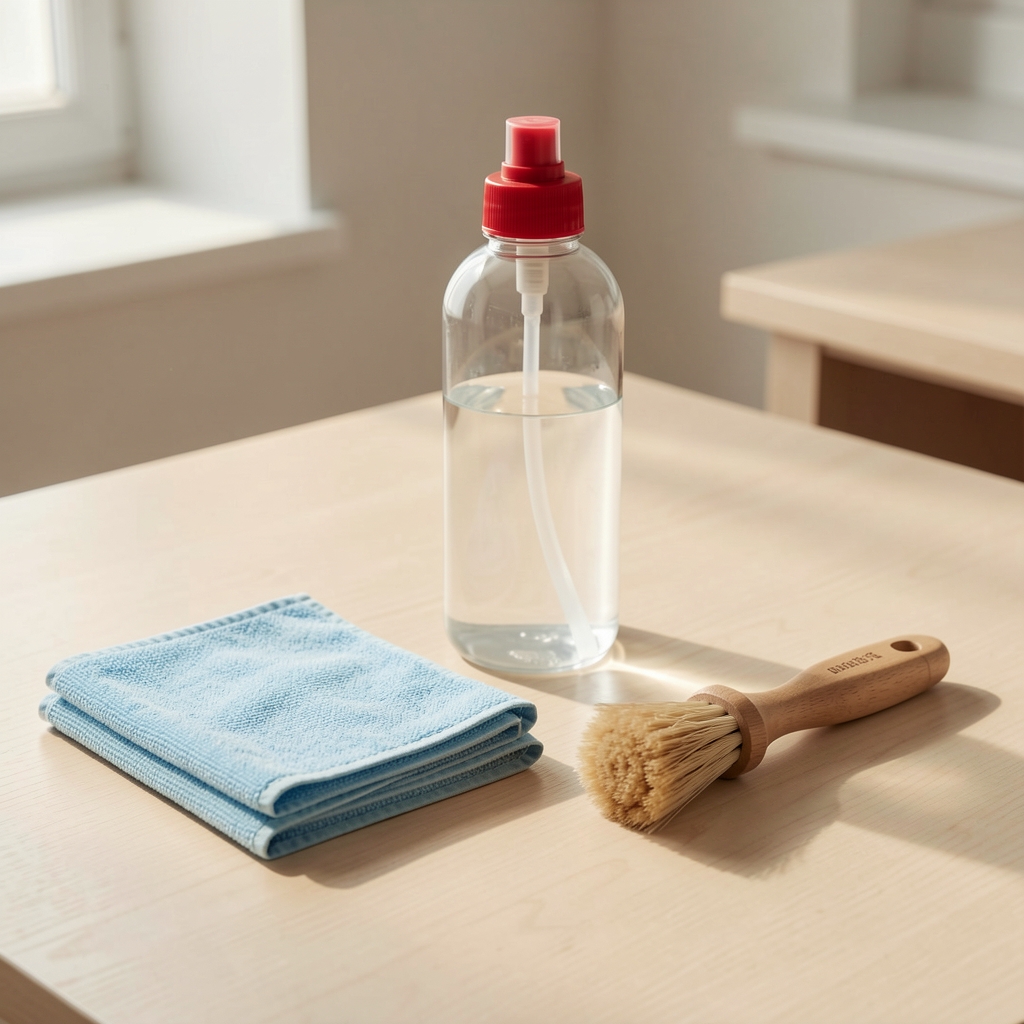
Words on packaging describe the manufacturer's intention, while instructions and ingredient lists describe what is inside. The three cards below show habits that apply whatever the label says.
Use the stated dilution and avoid treating excess product as extra care.
Wash, dry and store reusable tools according to their material and setting.
Consider whether a routine is solving the actual problem or merely repeating a habit.
Few choices are simply better or worse. The table sets out trade-offs that readers often raise, with a note on what each option asks of the user. It is intended to support a decision, not to settle it.
| Choice | What It Can Reduce | What It Can Ask of the User |
|---|---|---|
| Refill containers | Single-use packaging | Storage space, labelling and careful handling when refilling. |
| Reusable cloths | Disposable wipes and paper | Regular washing, drying and replacement when worn. |
| Measured dilution | Excess product use | A measuring cup or dosing cap and attention to the label. |
| Concentrated products | Packaging volume and transport weight | Correct dilution and safe storage of the concentrate. |
| Ventilation instead of fragrance | Added scents and residues | Opening windows regularly, even in colder months. |
| Durable tools | Frequent replacement | Cleaning and drying after use, and a higher initial cost. |
Environmental language should remain specific. A method may reduce packaging while requiring more time, or save water while needing a different surface sequence. Honest comparison is more useful than a universal green claim.
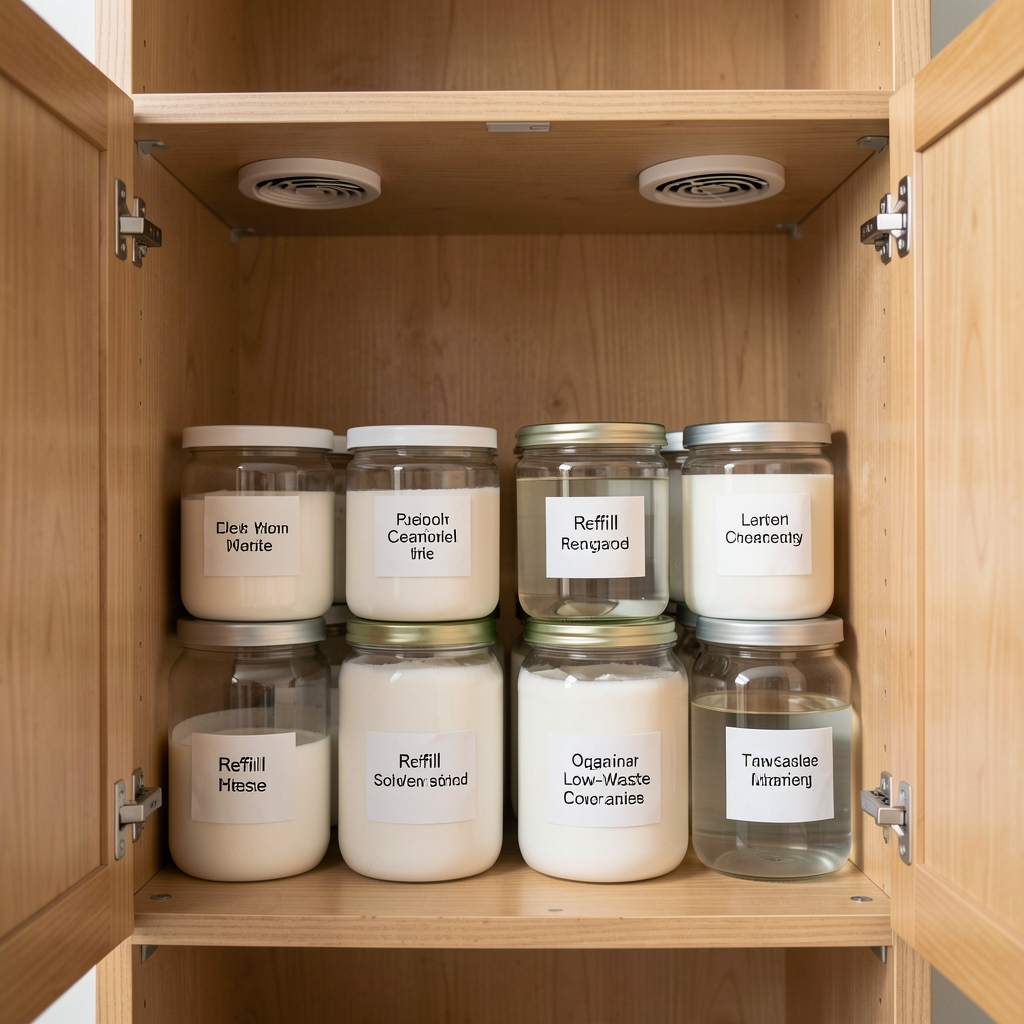
Storage is one example. A cupboard with labelled refill containers is tidy and can reduce packaging, but it also needs space, good ventilation and a clear arrangement so that products are never mixed or stored in unmarked bottles. Safety information on the original packaging remains the first source for storage and disposal.
Surface compatibility is another. A gentler method may suit a sealed floor but require more repetition on a heavily used entrance. In that case the question is not which method sounds more careful, but which one fits the material and the use.
A routine can be reviewed in an afternoon. The steps below suggest how to look at what is used, what is needed and what could change without affecting the purpose of the work.
Write down the products, tools and quantities used in a typical week, along with the rooms in which they are used.
Check each product against its label and the surface it is used on. Note where a product is used for a purpose it was not designed for.
Choose one change at a time, such as measuring dilution or replacing a disposable item, so that the effect is easy to observe.
Note what changed, how it affected the work and whether the adjustment should continue.
A claim about the environment is only as useful as the detail behind it. Which part of the process does it describe, compared with what, and under which conditions? When those questions have answers, the claim can be weighed. When they do not, it remains a general impression.
This is the standard the platform applies to its own pages. Where a method reduces one kind of use and increases another, both are described. Where information is missing, the page says so. Readers are invited to treat any similar claim in advertising or on packaging with the same questions.
The list below gathers small habits that appear in many households and offices. None requires special equipment, and each can be introduced or dropped independently.
Not necessarily. Some methods reduce packaging or product use but take more time or attention. The trade-off is part of the comparison and depends on the room, the material and the people involved.
No. Natura does not endorse, rank or sell products. It explains how to read labels and compare options.
Product packaging and the manufacturer's safety data sheet are the first sources. Questions about regulations can be directed to the relevant German and European authorities.
The checklist page offers a routine that can be adapted to measured product use, and the methodology page explains how Natura prepares its pages. Questions can be sent to Natura at Hauptstraße 15, 10117 Berlin, Germany, or by phone on +49 30 5238 9174.
Our Methodology Contact Natura