Room Brief
A one-page prompt for describing use, surfaces, access and timing.
Open guideDownloadable-style reading panels and reference ideas for households, office coordinators and anyone preparing a premises care conversation.
The resources are designed to be read on screen, printed or copied into a shared document. They contain prompts and examples rather than rules, and each one links to the page that explains the reasoning in more detail. Nothing on this page needs to be purchased or registered for.
See the Reference Shelves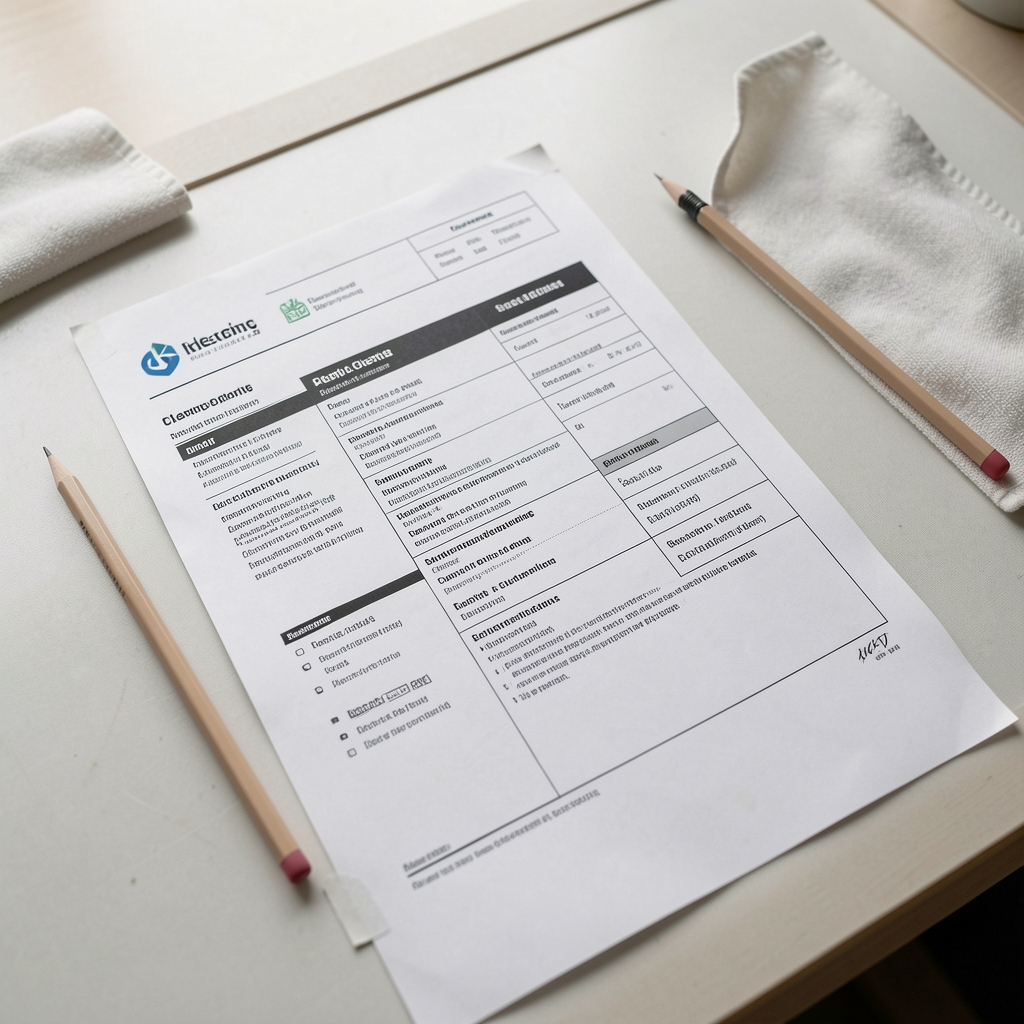
The three panels below are the most frequently requested starting points. Each one opens a page that can be read in a few minutes.
A one-page prompt for describing use, surfaces, access and timing.
Open guideA way to separate daily signals from periodic review work.
Open checklistA neutral starting point for comparing a proposed scope.
Ask NaturaThe table lists the main reading sheets, who they are written for and how long they take to read. It is meant as a quick way to choose the right place to begin.
| Sheet | Written For | Reading Time | Where to Find It |
|---|---|---|---|
| Room brief | Households and small teams preparing a conversation | About 8 minutes | Planning guide |
| Room care checklist | Homes and small offices | About 6 minutes | Checklist |
| Record template notes | Facilities coordinators and property managers | About 7 minutes | Care standards |
| Handover prompts | People moving in, out or between tenancies | About 6 minutes | Move-in care |
| Resource-aware method notes | Anyone reviewing products, tools or routines | About 9 minutes | Resource-aware methods |
Templates are starting points. Local building rules, manufacturer instructions and the actual people using a room remain important sources of context.
A sheet that works in a small flat may need to be extended for a multi-storey office, and a note format designed for a team of five may not suit a team of fifty. Treat each resource as a draft, change the wording to match the way people in the building talk and keep a dated copy of the version in use.
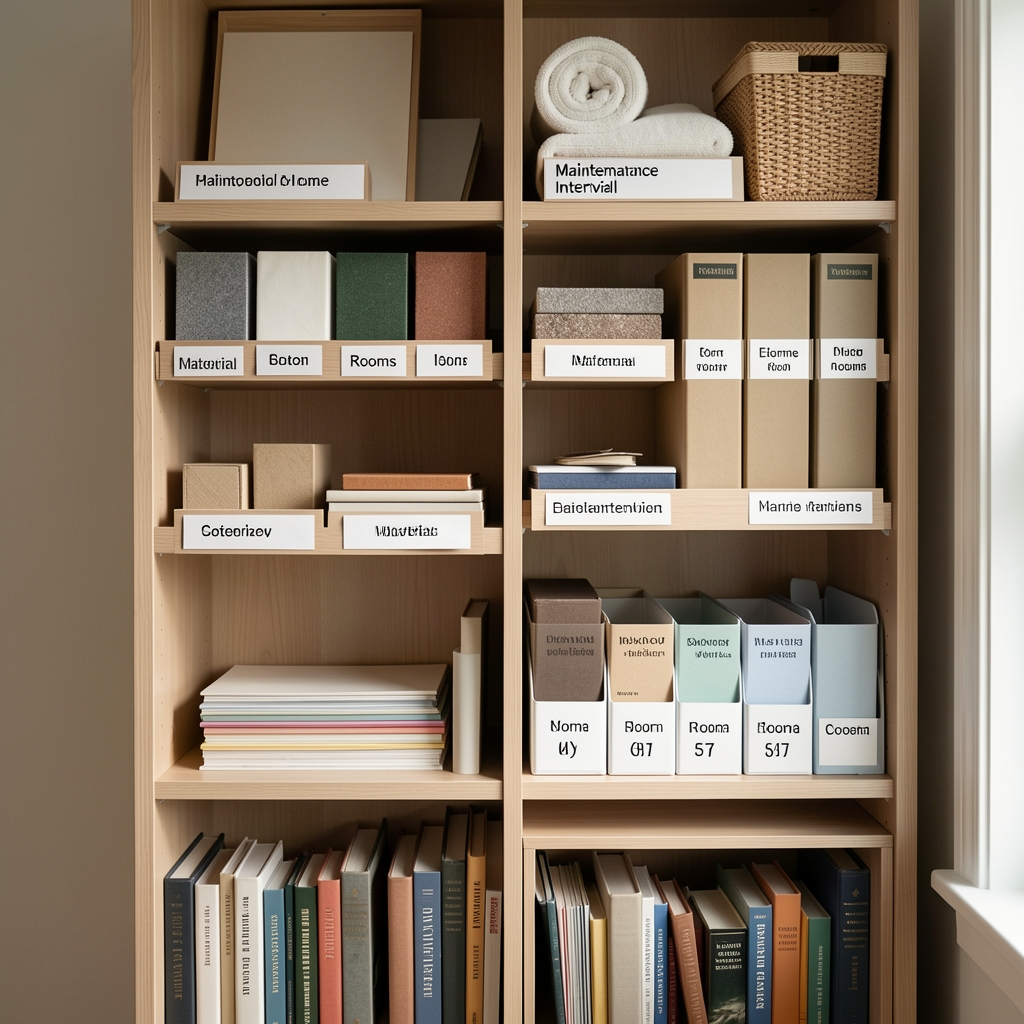
Many households and offices keep a simple folder, either on paper or on a shared drive. The panels below describe four sections that make such a folder easy to use. They are listed in the order in which people tend to need them.
A floor plan, a list of rooms and a note of the main surfaces, with copies of any care leaflets from flooring or worktop suppliers.
The checklist in use, the agreed access windows and the name of the person who updates them.
Dated notes from each visit or routine, filed in date order so that patterns become easy to see.
Names and roles of the property manager, the caretaker and any outside service, along with relevant contract or house-rule documents.
A reference folder is only useful if someone else could pick it up and understand it. If a newcomer cannot find the access arrangements or the latest note within a minute, the folder needs a simpler order, not more pages.
Readers who are new to the platform often ask where to begin. The sequence below is one reasonable route through the resources. It can be shortened or reordered depending on the question at hand.
Yes. They are provided for information, and readers are welcome to print them or adapt the wording for their own household or team.
No. They are general reading aids. For questions about a particular building, material or contract, readers should consult the manufacturer, the property manager or a qualified professional.
Yes. Suggestions and corrections can be sent through the contact page and are read by the editorial desk.
Natura, Hauptstraße 15, 10117 Berlin, Germany. Telephone +49 30 5238 9174. The editorial desk reads messages sent through the contact page and replies in writing.
Contact Natura Read the FAQ